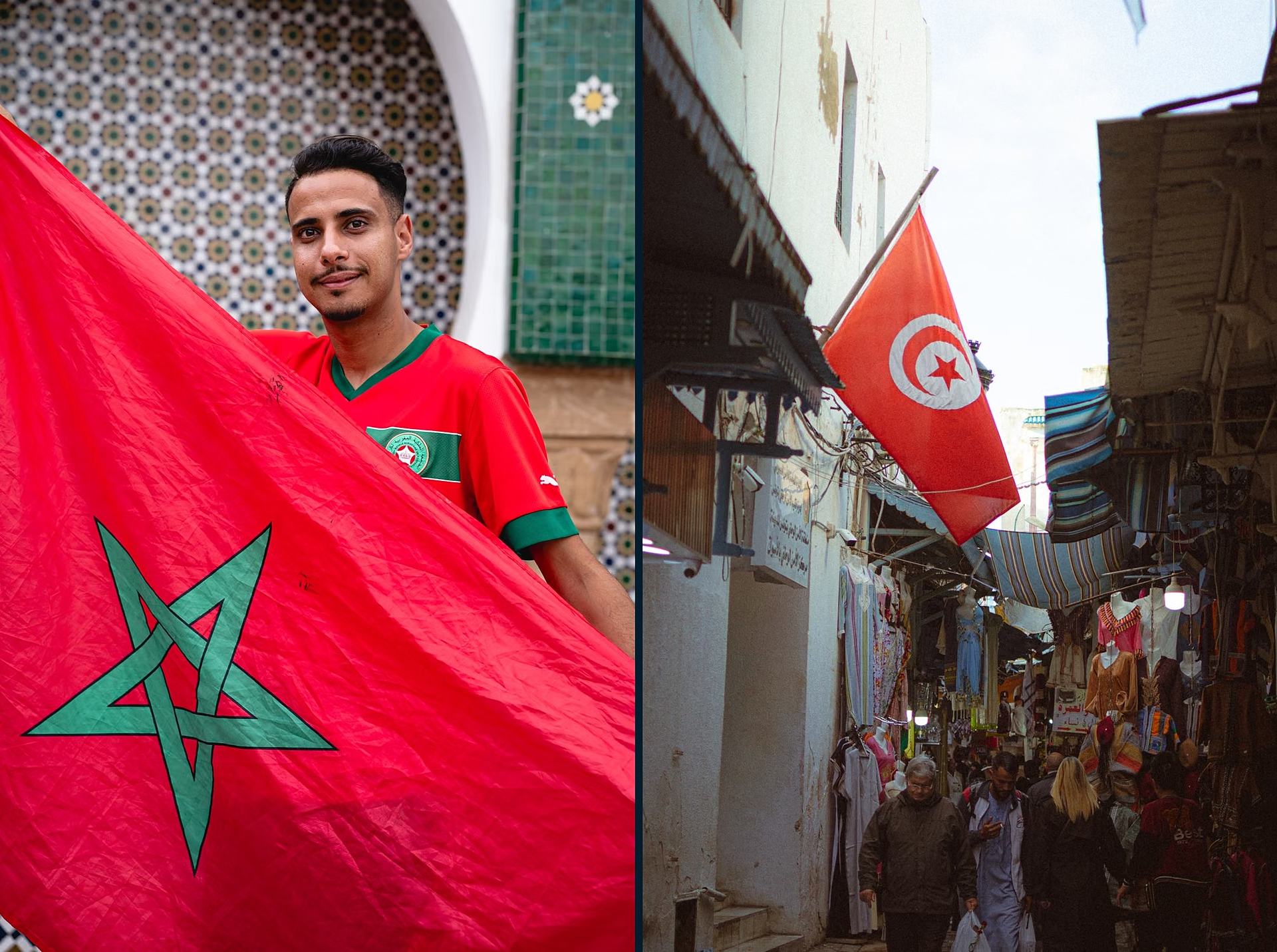
- Three core markets with complementary profiles: an industrial platform in Morocco, infrastructure and regional access in Tunisia, fast growth in Côte d'Ivoire.
- North African companies rarely fail on their product, far more often on introductions, business culture and reading the market.
- The choice of entry mode (agent, distributor, representation, partnership, subsidiary) drives cost and risk.
- Testing the market before opening a local entity sharply reduces the risk of failure.
Three core markets, three profiles
All three countries are classed as core markets in the AfriCand Index 2027: their opportunity and readiness exceed the median of the 52 markets. Yet their profiles are very different, and that is what gives the corridor its value.
| Morocco | Tunisia | Côte d'Ivoire | |
|---|---|---|---|
| Rank and score (AfriCand Index) | 3rd · 72.8 | 11th · 62.6 | 10th · 63.7 |
| GDP 2026 (IMF) | $196bn | $63bn | $110bn |
| Average growth 2026-2028 | 4.4% | 2.0% | 6.2% |
| Public debt 2026, % of GDP | 67% | 86% | 58% |
| Population 2026 | 38.0m | 12.4m | 33.8m |
| Sovereign ratings | S&P BBB-, Moody's Ba1, Fitch BB+ | Moody's Caa1, Fitch B- | S&P BB, Moody's Ba2, Fitch BB |
Morocco is an industrial and logistics platform, anchored by Tanger Med, and a natural partner for expansion south. Tunisia scores very well on infrastructure and regional access, but its public debt weighs. Côte d'Ivoire combines fast growth, BB-category ratings from all three agencies and leadership in cocoa processing.
Why first contact fails
The Moroccan companies AfriCand interviewed in 2026 describe the same difficulties when approaching West Africa:
- Poor introductions that lead to people with no decision-making power.
- Limited knowledge of local business culture and of the time needed to build trust.
- A view of the market built from afar, often too optimistic on volumes and timing.
- Lobbying and distribution networks closed to newcomers.
These are not market obstacles, they are access obstacles. They are dealt with before investing, not after.
Choosing the right entry mode
| Entry mode | Benefit | Limit | When to choose it |
|---|---|---|---|
| Sales agent | Low cost, quick start | Little control over the customer relationship | To test demand |
| Distributor | Existing coverage and logistics | Dependence, risk of poorly negotiated exclusivity | Fast-moving products |
| Commercial representation | Local presence without a subsidiary, market feedback | Medium-term commitment | B2B sales and projects |
| Partnership or joint venture | Access to the partner's network and licences | Governance must be well framed | Regulated sectors |
| Subsidiary | Full control | Set-up cost and time | Once the market is proven |
Five conditions for success
- Check the market on the ground before committing capital: prices, competitors, channels.
- Use trusted channels for first introductions.
- Choose the entry mode suited to the sector and to the level of risk accepted.
- Master the OHADA framework from the first negotiation: contracts, representation, securities.
- Measure early results before opening a local entity.
AfriCand's role
Based in Abidjan and active on the North Africa and West Africa corridor, AfriCand combines market research, entry strategy and on-site commercial representation. Companies can test the market, meet the right decision makers and decide on their set-up based on facts rather than impressions.
- Start with field research and commercial representation before any heavy investment.
- Build the expansion in two steps: Côte d'Ivoire first, then neighbouring WAEMU markets.
- Anticipate the OHADA framework in distribution and representation contracts.
- IMF, World Economic Outlook, October 2026
- S&P, Moody's and Fitch rating actions to 31 October 2026
- AfriCand Africa Outlook 2027, AfriCand Index and country profiles
- AfriCand interviews, June to September 2026
Figures quoted come from official and institutional sources published in 2025 and 2026, compiled in the AfriCand Africa Outlook 2027.