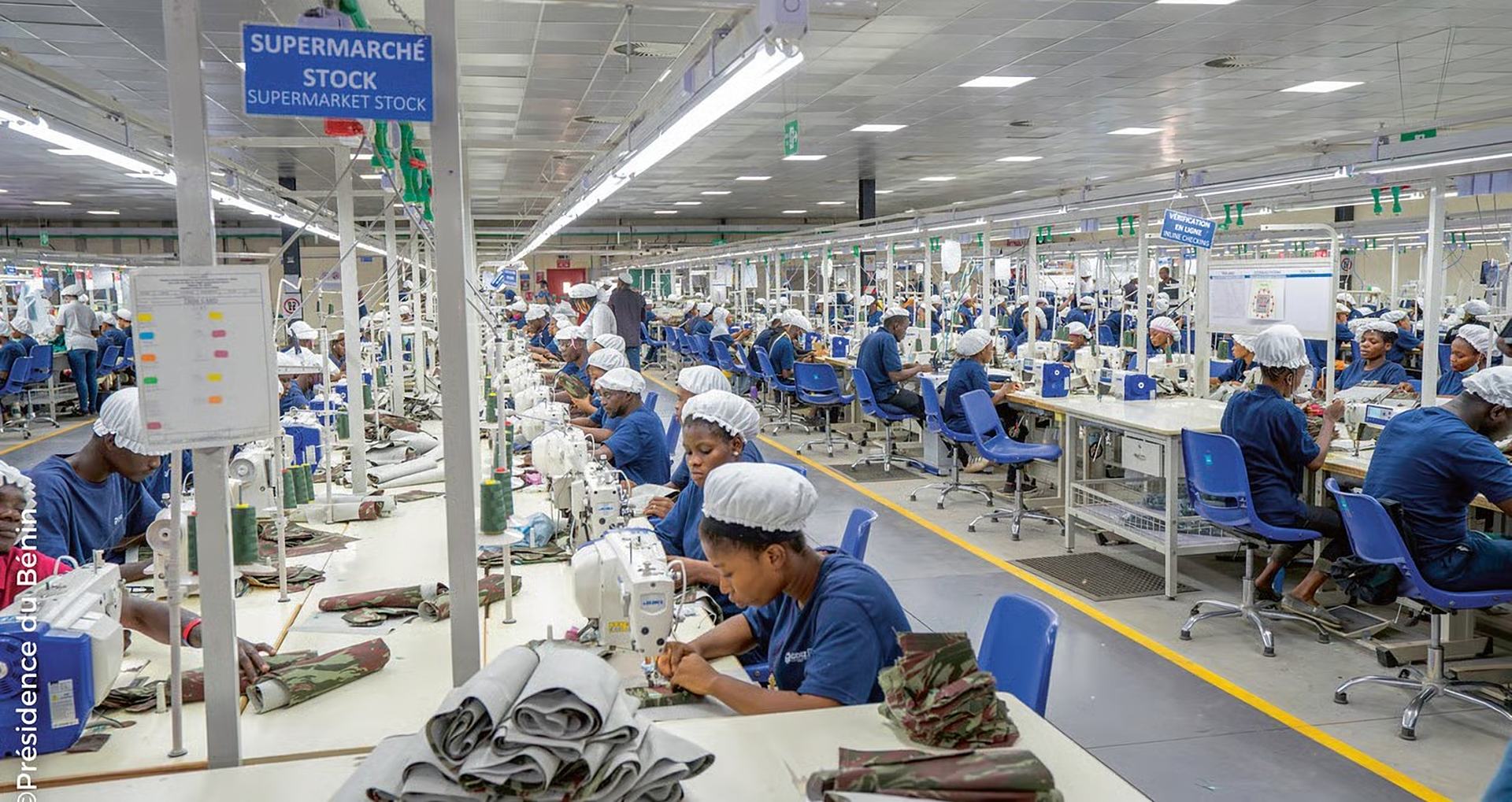
- Benin used to export most of its cotton and cashew raw; it chose to process at home.
- The zone is driven by a partnership between the state and ARISE IIP, which bears a construction cost of about $1.5bn.
- The zone is operating and offers a one-stop shop, warehouses, a container yard and housing.
- Job figures vary widely across sources: every opportunity must be qualified.
From raw exports to local processing
Benin used to export most of its cotton and cashew raw, leaving the added value abroad. The government chose to build processing capacity at home, with a 1,640-hectare integrated industrial zone located 45 km from Cotonou port.
A public-private partnership
The zone rests on a partnership between the Republic of Benin and ARISE IIP, which bears the construction cost, estimated at about $1.5bn. Investors find a one-stop shop, warehouses, a container yard and housing.
| Date | Milestone |
|---|---|
| 2021 | First processing units signed in the zone |
| May 2025 | AfDB approves a $100m stake in ARISE IIP |
| September 2025 | ARISE IIP closes a $700m fundraising |
| 2030 | Target of 300,000 jobs |
Results and watch points
The zone is operating; processed "Made in Benin" cashew was among the products showcased in 2025. ARISE IIP zones in Gabon, Benin and Togo host more than 400 companies.
Job figures vary widely across sources, and reported social and supply issues still need to be verified. Impact claims must be checked against official data.
Benin in the AfriCand Index
| Indicator | Value |
|---|---|
| Rank in the AfriCand Index 2027 | 21st of 52, score 54.1, stable niche |
| GDP 2026 (IMF) | $27bn |
| Projected average growth 2026-2028 | 6.9% a year |
| Inflation 2026 | 0.8% |
| Public debt 2026 | 58% of GDP |
| Sovereign ratings | S&P BB-, Moody's Ba3, Fitch B+ |
Low inflation, a BB- rating from S&P and the Glo-Djigbé industrial zone make Benin a stable niche for agro-processing. Capital access remains the country's weak point in the index.
What a manufacturer should check before setting up
- The strength of the sponsor and its track record in the sector.
- Real outlets: identified buyers, contracts, prices.
- Raw material supply and its seasonality.
- The zone's terms: costs, services, tax and customs regime.
- Project governance and the allocation of risks.
- Treat industrial zones as entry points, not guarantees of success.
- Qualify every opportunity on sponsor, market and governance.
- Compare Glo-Djigbé and Togo's Adétikopé platform depending on the target sector.
- GDIZ official website and 2025 brochure
- GDIZ press release (12 September 2025)
- Agence Ecofin (May 2025)
- IMF, World Economic Outlook, October 2026; S&P, Moody's, Fitch
- AfriCand Africa Outlook 2027, Part VI and country profiles
- Photo © Presidency of Benin
Figures quoted come from official and institutional sources published in 2025 and 2026, compiled in the AfriCand Africa Outlook 2027.